
THE PARADISE WE LIVED IN WITHOUT KNOWING IT!
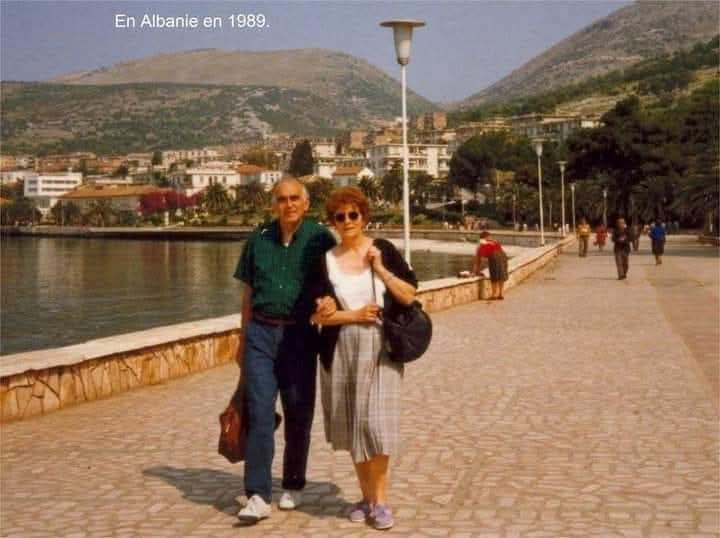
It was one of those times people describe as “so long ago that it is almost beyond memory.” It lies not so far back on the calendar, just it runs so deep in the senses. In truth, it was 1994 or 1995, at the latest. But that time cannot be measured in years. It must be measured in breaths.
It was one of the brightest periods Albania had ever known. I say this by my own measure, through my own body, through my own memory. A time of open hope, when money flowed freely, like the morning air, without the shadows of usurpers or the noise of wrongdoers. Saranda, especially. It was like a young bride, shy and beautiful, not yet aware of how many eyes would one day covet her.
The city was full of civilised, peaceful, well-mannered people. Public spaces could breathe. Greenery fell like a soft curtain over the old stone stairways. Institutions functioned quietly, like old clocks that had somehow managed to keep time.
English tourists would arrive from Corfu, spend their days swimming at “Centrali”-Beach and, without realising it, toss coins to us children: mischievous little daredevils, born swimmers, small in stature but completely free. We would fly through the water, performing backward and forward somersaults, then emerge onto the shore like little human fish. We were graceful in our bodies, but above all, in our manners. The tourists would photograph us with their cameras. They seemed to enjoy observing local life as though they had found themselves somewhere exotic, perhaps in Laos, Kenya or Cuba.
Hope was everywhere. It was not a feeling; it was a climate. The future seemed like a straight road, one that would naturally lead us to paradise. We did not know that paradise was not waiting ahead of us, but already lay beneath our feet. Nor did we know that we would destroy it with our own hands, slowly, year after year.
Some things cannot be described at length. They can only be experienced. The scent of flowers drifting in from every direction, mingling with the iodine-rich smell of the sea. A walk towards what is now called “Pikëza e Vogël” felt like a journey into another world, because the road was open, untouched by buildings, noise or greed. The city still knew how to pause.
The boulevard may have seemed simple to a passing eye, but it was a boulevard with a history. More romantic than those of Tenerife, Genoa or Thessaloniki. It was known as the Saranda promenade, or simply “xhirua”. A word that seems to walk all by itself.
Every year it grew more crowded, drawing visitors far beyond the limits of the town itself. But for the locals, that boulevard was the stage of everyday life. Our very own balcony of Romeo and Juliet. Young people went out for “kamaq”, or “peshkim”, expressions we might nowadays call flirting, getting to know someone, or dating. They strolled from Vaso Gjoni to Magllara and beyond. The first modern cafés began to appear there, but more importantly, so did the glances, the waiting, the silences.
I was little then. A child who followed the promenade as though it were a game. But the memory I hold most dearly is something else.
My parents owned a small café in the town centre. A little refuge for people.
Among the friends who would occasionally visit my parents’ modest café was Pëllumbi, from Janjar, together with his young wife. They were a cheerful, gentle couple, carrying that quiet light people have when they are still at the beginning of their life together. He was a police officer in those years; later, he became an emigrant, like almost everyone else. Back then, we had no idea that leaving would become the country’s most travelled road.
Before heading out for their evening stroll along the boulevard, they would always stop by our café. It was more than just a brief visit. It was a small ritual, a sign that the evening was about to begin. For a few moments, the café became a station, and they became travellers on the journey of life.
I would sit beside them, filled with a restrained kind of excitement. I would ask them to take me along on their evening walk. And they always did.
At Magllara, we would sit down like tourists. Not standing around, not in a hurry. At a table. And we were served.
The Coca-Cola would arrive cold, carefully placed on the table, just as it would be for anyone else. It was not merely a drink. It was inclusion. It was the feeling that I, too, belonged to that moment, that boulevard, that world slowly unfolding before us. That bottle tasted of an entire world opening towards the West!
Today, I understand that what I remember is neither the drink, nor the café, nor the boulevard. It is the moment when a child was invited to sit at the table as an equal among adults. When he felt welcomed into life itself. Before our paths diverged, before emigration became a shared destiny, there existed a pure moment when everything was still here. And that was enough!
Today, you can travel across Europe and see breathtakingly beautiful cities, but you will never find that feeling again. Because it was not simply about beauty. It was about harmony. A rare moment when the city, its people and the sea existed in perfect accord. A quiet paradise that truly existed, and that today lives only in the memories of those fortunate enough to have experienced it.
To have lived in paradise without knowing that we were living in paradise!